Explore product personalization and 3D preview options for custom-product workflows.
Plan around your store requirements.
Talk with Cmsmart about implementation options.
What you can explore:
- ✅ Product options for configurable products
- ✅ 3D previews for custom-product workflows
- ✅ Implementation options for your store
Want ecommerce updates and resources?
Subscribe for ecommerce updates:
You'll get:
- ✔ Ecommerce tips and product updates
- ✔ Tutorials and service information
- ✔ Personalization and 3D product resources


Introduction: Why Custom Ecommerce Web Development Matters in the AI Era
Custom ecommerce web development can tailor a site to a business model, customer requirements, and planned operations when the scope and platform support those needs.
Custom ecommerce solutions allow for:
Personalized User Experiences: Use AI-assisted personalization only when customer data, consent rules, and a defined use case support it; validate relevance and customer response.
Scalability: Design for defined traffic and transaction targets, then verify capacity with load tests, monitoring, and a documented scaling plan.
Integration planning: Evaluate CRM and ERP connections, marketing tools such as Klaviyo, content assistants such as ChatGPT, and analytics such as Google Analytics 4. Confirm APIs, permissions, data flows, and review responsibilities for each selected system.
Competitive Differentiation: Use branded design to express a clear offer, then validate it with customer research and task testing. Compare approaches from custom ecommerce web design companies and best ecommerce web development services.
This tutorial will guide you through:
Understanding the essentials of custom ecommerce web development.
Exploring AI-assisted tools and the data, review, and measurement needed to evaluate them.
Step-by-step planning and execution of a scalable, personalized online store.
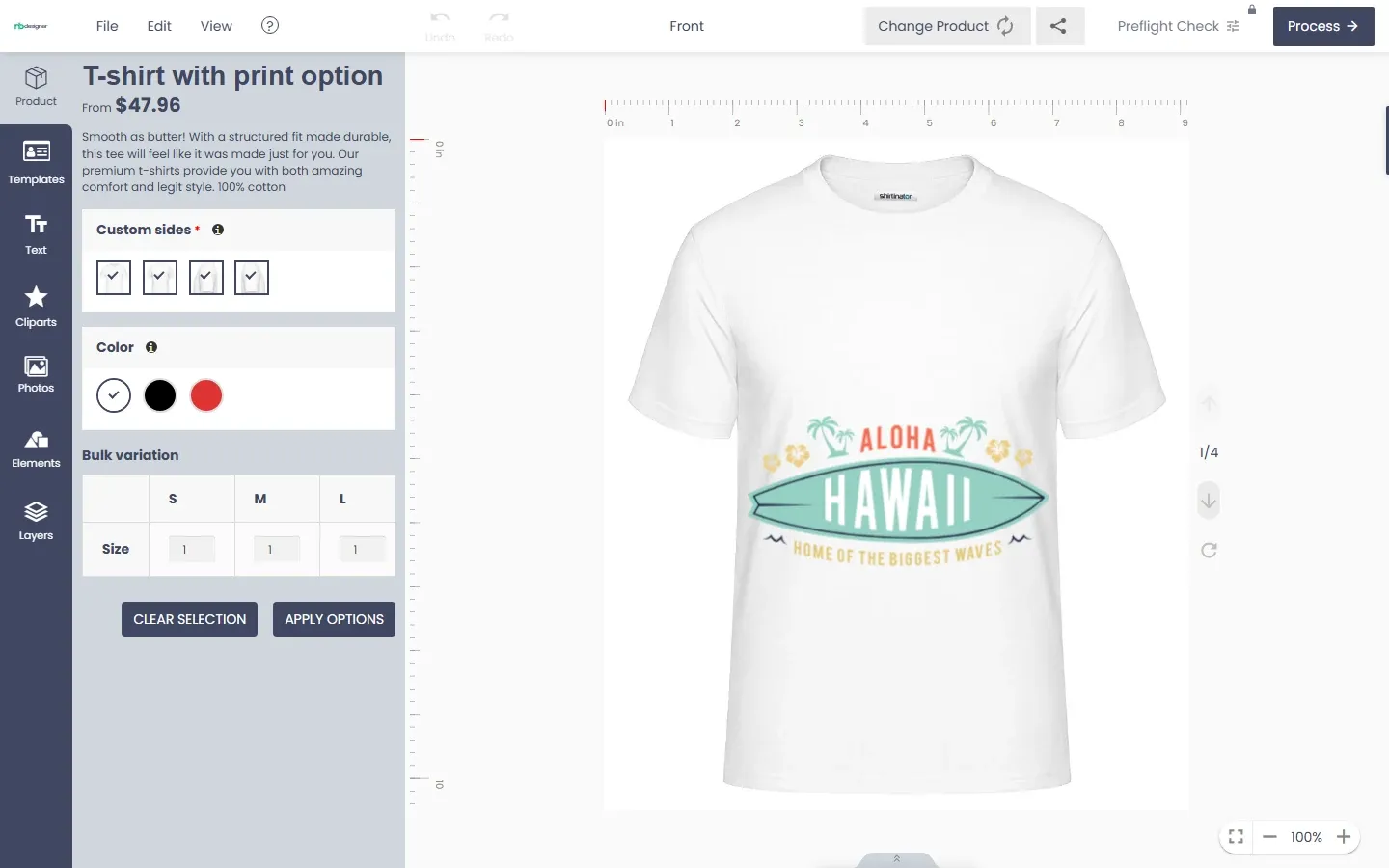
Review provider evidence and inspect product examples from Cmsmart, including its Product Designer Plugin and Custom Product Configurator Demo; product pages and demos are not case-study proof.
Explore related resources like WooCommerce development, NextCommerce innovations, Web to Print solutions, and loyalty apps for business for comprehensive insights.
This guide explains how to define, evaluate, and test a custom ecommerce implementation, including where AI-assisted tools may fit.
Next, we’ll dive into Section 2: Understanding Your Business Needs and Customization Goals.
Understanding Your Business Needs and Customization Goals
Before diving into the development process, it’s crucial to assess and define your business needs and customization goals. This foundation will guide every decision, from platform choice to design and feature prioritization.
Define Your Target Audience and Unique Value Proposition
Identify your ideal customer personas.
Determine what sets your business apart—whether it’s personalized experiences, niche products, or unique services.
Outline Essential Features and Customization Needs
List candidate features such as product configurators, dynamic pricing, AR/3D previews, and loyalty integrations only where a documented buyer or operating need supports them.
Use Cmsmart’s WooCommerce Product Designer Plugin and Product Configurator Demo as inspiration.
Consider integrating Web to Print solutions for a personalized customer experience.
Establish Scalability and Future Growth Plans
Anticipate future needs, such as expanding product lines, international markets, or increased traffic.
Evaluate modular platform options such as NextCommerce; verify current modules, supported loads, hosting, and upgrade constraints against the project requirements.
Align with Budget and Timeline Constraints
Set a realistic budget and timeline, factoring in development costs, customization complexity, and maintenance.
Compare scope, price, version compatibility, and maintenance for options such as Cmsmart’s loyalty apps for business and WooCommerce extensions.
Collaborate with Stakeholders
Involve key stakeholders—marketing, operations, and product management—to document cross-functional needs, conflicts, and ownership.
Document feedback to refine goals and expectations.
Align the business goals with technical requirements to create a roadmap with explicit priorities, dependencies, acceptance checks, and measurements.
Next, we’ll explore Key Features of Custom Ecommerce Web Development.
Key Features of Custom Ecommerce Web Development
Evaluating AI-Assisted Personalization
For personalized recommendations, content, or pricing, evaluate tools such as Klaviyo and Dynamic Yield, including their data requirements, controls, and measurement options.
Dynamic Product Configurators
Use tools like Cmsmart’s Product Configurator Demo for real-time product customization.
Scalable Architecture
Evaluate modular platforms such as NextCommerce against measured traffic, transaction, hosting, and recovery requirements.
AR/3D Product Previews
Integrate AR/3D tools such as Shopify AR for immersive shopping experiences.
Integration Planning
Define required CRM, ERP, and loyalty connections, including options such as Cmsmart’s Loyalty App; treat AI-powered analytics as a separately scoped integration with its own data and review controls.
Optimized UX/UI
Prioritize intuitive navigation, measured load performance, and responsive design, then test their effect on task completion and conversion.
Next, we’ll cover Choosing the Right Development Partner to bring your vision to life.
Choosing the Right Development Partner
Essential Qualities to Look For
Ask for verifiable project examples relevant to custom ecommerce development and WooCommerce.
Review a portfolio for projects similar in platform, workflow, and scale, and confirm each provider’s actual scope.
Ask how the provider scopes AI-assisted tools, API integrations, human review, and failure handling.
Define support hours, escalation paths, load targets, and scaling responsibilities in the proposal.
Compare Top Providers
When evaluating Cmsmart, review its WooCommerce services, proposed AI integrations, and available support against the documented requirements.
Explore other leaders through ecommerce web design companies and best ecommerce web development services.
Evaluate Communication and Support
Opt for providers with proactive communication and transparent processes.
Check client testimonials at Cmsmart’s testimonial page.
Review Pricing and Contract Flexibility
Understand pricing models and engagement options (project-based, retainer, dedicated teams).
Explore Cmsmart’s pricing and packages for clarity.
Next, we’ll review Evaluating Cmsmart’s Custom Ecommerce Solutions and the evidence and workflow checks buyers should apply.
Evaluating Cmsmart’s Custom Ecommerce Solutions
WooCommerce and Web to Print Options
Cmsmart offers the WooCommerce Online Product Designer Plugin and Web to Print solutions as product-customization options. Confirm platform versions, design workflow, order data, and implementation scope for the selected configuration.
Evaluating AI Personalization Integrations
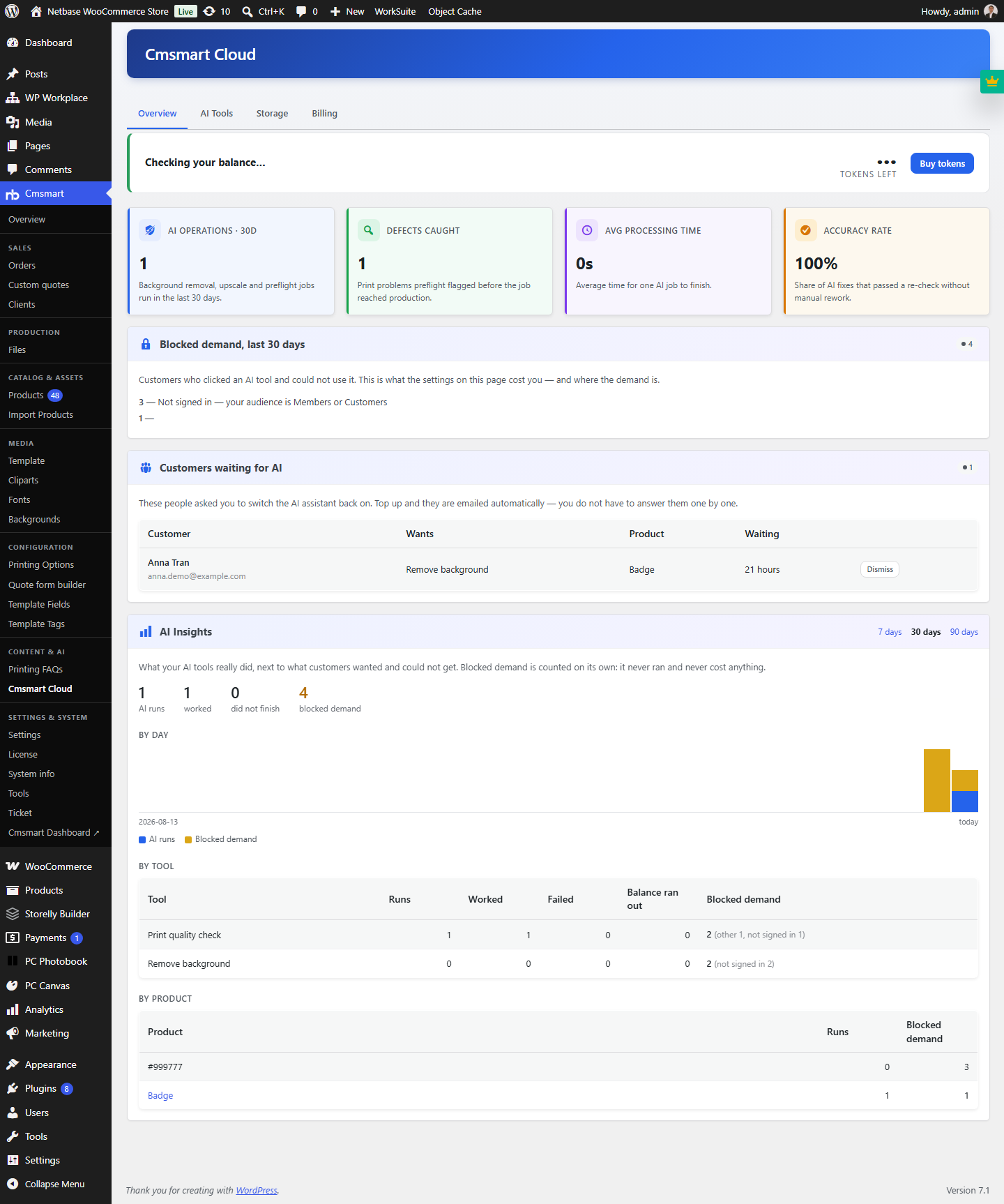
Dynamic Yield, Klaviyo, and ChatGPT are external tool examples. A Cmsmart project may connect selected tools when their APIs, plans, data permissions, and the agreed scope support the use case; outputs and customer impact still require review and measurement.
Platform Scalability Checks
Cmsmart presents NextCommerce as a modular platform option. Verify current modules, hosting capacity, load targets, and upgrade responsibilities before relying on it for a particular growth plan.
Project Evidence and Workflow Evaluation
Next, we’ll dive into Step-by-Step Guide to Custom Ecommerce Web Development for a comprehensive action plan.
Step-by-Step Guide to Custom Ecommerce Web Development
Step 1: Planning and Strategy
Define business goals, target audience, and key features.
Review competitor benchmarks and align with market trends.
Select platforms and tools (e.g., WooCommerce, NextCommerce).
Step 2: Design and UX Integration
Develop wireframes and design mockups.
Prioritize mobile-first and responsive design.
Integrate personalization and dynamic elements.
Step 3: Backend Development and Integrations
Design architecture for measured load and recovery targets, and scope CRM and ERP integrations around documented APIs, permissions, monitoring, and reconciliation.
Evaluate tools such as Klaviyo and ChatGPT for specific automation tasks, with data controls, human review, and fallback steps.
Implement payment gateways and secure data management.
Step 4: Testing and Optimization
Conduct thorough functionality and UX testing.
Optimize for performance, loading speed, and mobile usability.
Review analytics setup and data tracking tools.
Step 5: Launch and Continuous Improvement
Deploy the ecommerce website with a robust marketing strategy.
Monitor performance metrics and user behavior.
Plan for regular updates, new feature rollouts, and scaling needs.
Next, we’ll explore Evaluating AI Tools and Automation for Custom Ecommerce Sites.
Evaluating AI Tools and Automation for Custom Ecommerce Sites
Klaviyo and Dynamic Yield for Personalization
Configure email automation and product recommendations for defined segments, then measure deliverability, relevance, and conversions rather than assuming sales lift.
Jasper and ChatGPT for Content and Engagement
AI-assisted tools can draft content or support replies; require human review, approved knowledge sources, privacy controls, and an escalation path.
Google Analytics 4 and Hotjar for Data-Driven Insights
Use real-time data to identify journey friction and test changes; measure any conversion effect against a defined baseline.
Shopify AR and Web to Print Integrations
Enhance product visualization with AR/3D previews and custom printing options.
Next, we’ll move on to Common Challenges and How to Overcome Them to prepare you for potential hurdles.
Common Challenges and How to Overcome Them
Challenge 1: Budget Constraints
Solution: Prioritize essential features and compare the implementation and maintenance cost of modular options such as Cmsmart’s WooCommerce plugins; modularity alone does not guarantee lower cost.
Challenge 2: Integration Complexity
Solution: Evaluate platforms with documented APIs, then verify CRM, ERP, and AI-tool compatibility through current documentation and a scoped integration test.
Challenge 3: Scalability Concerns
Solution: Evaluate flexible architectures such as NextCommerce against load tests, capacity plans, hosting limits, and recovery requirements.
Challenge 4: User Experience and Engagement
Solution: Consider AI-assisted personalization, dynamic product configurators, and AR/3D previews only where they address a buyer need, then measure usability and engagement.
Challenge 5: Security and Compliance
Solution: Define security, privacy, and payment requirements; validate the implemented controls and applicable legal obligations because tools alone do not establish compliance.
Next, we’ll conclude with a Call to Action summarizing the key takeaways and inviting you to explore Cmsmart’s solutions.
Conclusion and Call to Action
A custom ecommerce website can combine scalable architecture, personalization, integrations, and automation. Each capability should be selected against buyer needs, source evidence, data controls, and measurable requirements; this guide does not guarantee conversion or business outcomes.
Ready to build your custom ecommerce solution? ?
Use this guide to define requirements, compare evidence, and plan a custom ecommerce implementation that can be tested against your business goals.